| Keynote Speaker Ⅰ |
| |
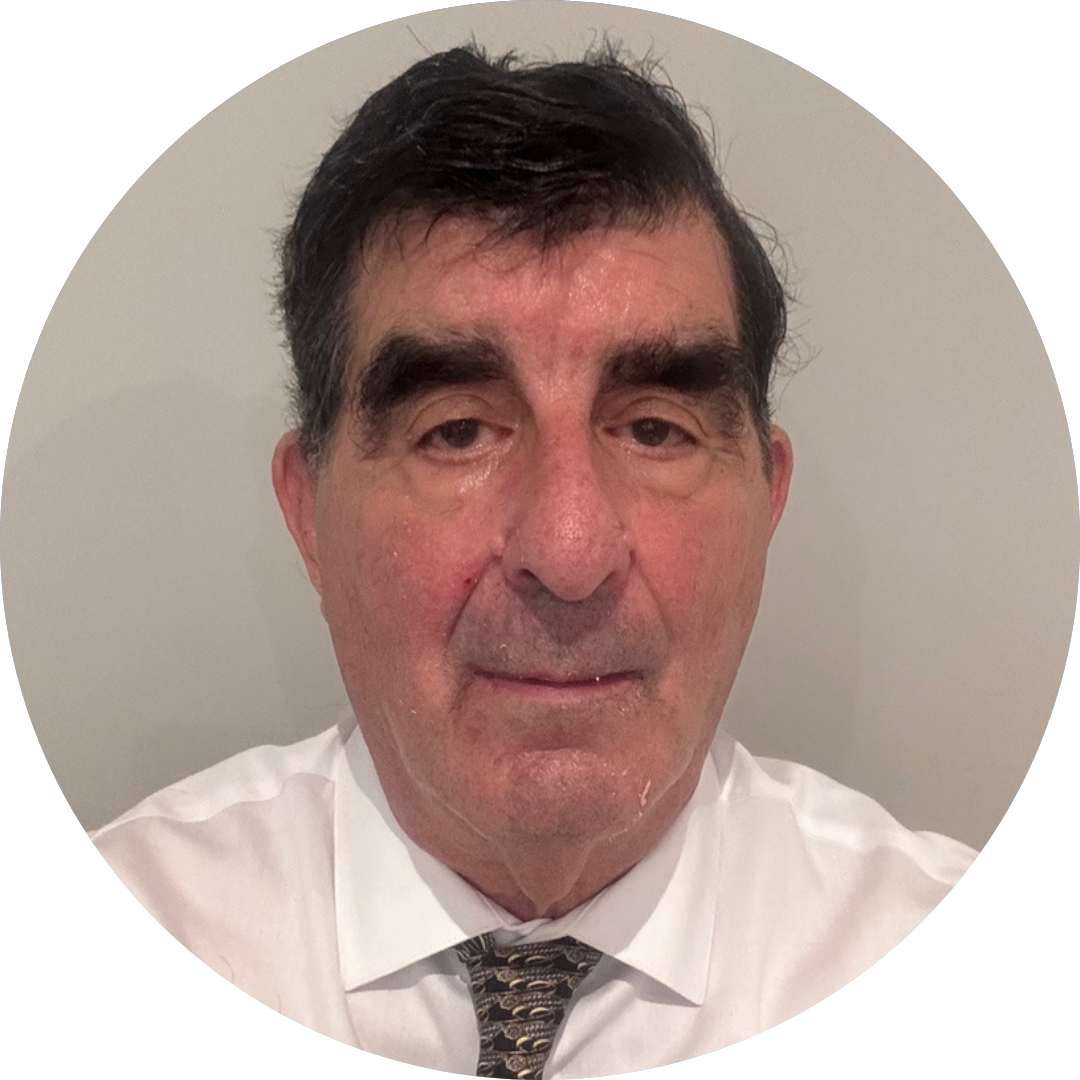 |
Robert G. Latorre
University of New Orleans, USA |
| |
Brief Introduction: Professor Latorre is focused on ship safety and decarbonization. He completed his BSE in Naval Architecture and Marine Engineering and an MSc in Naval Architecture at the University of Michigan. He studied Japanese at Middlebury, VT. He completed his MSc and Ph.D. in Naval Architecture at the University of Tokyo in 1980. He joined the University of Michigan in 1980 and the University of New Orleans in 1984. At the University of New Orleans, he designed and supervised the construction of the 38.3m x 4.57m x 3m towing tank fitted with a PC controlled wave maker and a shallow-water current maker. The box girder carriage has a max speed of 3-3.7 m/s depending on model size. After its commissioning in 1987, the UNO tank successfully participated in the ITTC collaborative shallow water resistance benchmark study.
During the tank construction, a collaboration with the Royal Thai Navy and the US Merchant Marine Academy was developed to acquire a high-speed data acquisition system. The system was used to experimentally investigate cycle to cycle diesel engine Pmax for various injection/settings. These tests were later conducted on the US Merchant Marine Academy MV Kings Pointer. After the towing tank was commissioned in 1987, a series of theoretical-experimental studies on vessel course-keeping stability with trim were completed. As part of the MSc thesis of students from IIT in Surabaya, Indonesia. In subsequent research with the Royal Thai Navy MSc R&D, the towed vessel course stability was investigated. One outcome was the introduction of the model to full-scale extrapolation that showed the lower Reynolds number in model tests is the reason for model tests predicting good towing course keeping which did not occur in the full-scale barge trials. As part of the decarbonization, microbubble drag on a 40 knot Surface Effect Ferry was investigated. Successful sea trials corroborated the tank tests.
As a visiting Professor at the University of Osaka, Dr. Latorre gave a series of nine lectures on Ocean Harvesting of wind, current, and solar renewable energy. Subsequently, he joined the Osaka Prefectural (now Metropolitan) University, where he did several studies on the mechanism of Ro-Ro ship capsize (MV Sewol) and methods to achieve capsize delay.
In 2015, Professor Latorre presented a short course on the IMO Energy Efficiency Design Index. This is the beginning of the lecture on Marine Decarbonization Overview. |
| |
| Speech Title: Marine Decarbonization Overview |
| |
Abstract: The decarbonization of marine transport is an important subject. In this lecture, I will attempt a brief overview. There are several benefits from making an overview: It helps to understand the many possibilities and provides a basis to sort the better choices to reduce the carbon footprint of marine transportation. The starting point begins with the statement that carbon reduction involves a number of possible solutions. For this lecture, it is useful to create a solution map. This map presents two key performance indicators KPI, On the vertical axis is the propulsive power in kW, with the horizontal axis denoting the operating time T (hrs for recreational boats to weeks for ocean-going ships).
The analysis also adds a third dimension: the fuel/battery power density kj/m3 which can be compared to marine diesel. For small craft, propulsion plant and fuel weight and volume become critical parameters. For larger tankers, bulk carrier and container ships, the IMO energy efficiency design index (EEDI) mandated carbon reduction has reached 30-%. This reduces the solutions to propulsion systems powered by low-carbon green fuels like Ammonia and Methanol that require 2-2.5 times the fuel volume of low-sulfur diesel fuel. So the designer has a trade-off in the volume of the green fuel with a corresponding loss of cargo and its revenue. Over a hundred years ago, ship designers faced the opposite design challenge when they switched from a large volume of coal to more compact marine diesel oil. Since the IMO has identified container ships as having the largest carbon emissions, it is useful to review the design of the newly launched methanol- and ammonia-fueled 150,000 TEU containerships. Assuming green methanol and ammonia, the dual-fuel engines have special fuel injection systems to inject 5% diesel to ignite the methanol or ammonia fuel. So, when operating on green fuel, the carbon emissions are reduced by 90%.
The impact of marine decarbonization on naval architects' and naval and marine engineers' education and licensing is significant. In 2026, the IMO adopted the Ammonia and Methanol fuel design rules. At this point, it is possible to discuss the future curriculum and required course learning objectives. The solution map has a number of propulsion designs ranging from DC battery fuel cells as well as internal combustion engine capable of using low sulfur marine diesel, LNG, ethanol, as well as Methanol and Ammonia. The operating cycle of safe bunkering of these fuels, safe fuel handling aboard, as well as fire safety require specialized learning laboratories and at-port field trips to observe safe practices. In conclusion, it is safe to say that the technical center of marine decarbonization has shifted to Asia, and the maritime community welcomes the continued progress reviewed in this short lecture. |
| |
| |
| Keynote Speaker Ⅱ |
| |
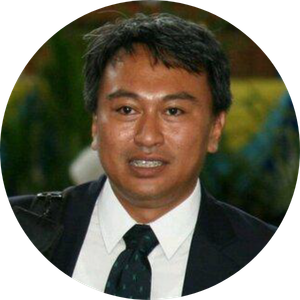 |
Ketut Buda Artana
Institut Teknologi Sepuluh Nopember (ITS) Surabaya, Indonesia |
| |
Brief Introduction: After completing his undergraduate study at ITS Surabaya in 1993 and becoming a lecturer at Marine Engineering, Faculty of Marine Technology ITS, Ketut Buda Artana (KBA) continued his Master's Degree studies at Newcastle University-UK and a Doctoral Degree at Kobe University-Japan. Apart from academic activities, KBA has carried out a lot of research and development of innovations in the field of maritime safety and marine installation at sea, including various research and innovations in LNG (Liquefied Natural Gas) transportation and distribution technology. There are 15 IPRs that have been produced with AISITS as a main commercialized product.
Position History: Vice Rector ITS (2015-2019), Director of International Office ITS (2007-2012), Head of safety laboratory (2019-2025)
Recognition: Young Academic Research Award-Japan Institute of Marine Engineering (2003), Best Startup Minister of Higher Education (2018), National Academic Leader on Maritim Minister of Higher Education (2019) · Member of Indonesian Science and Technology Association (AIPI) 2019, Board of Expert Indonesian Association of Oil and Gas Facility (IAFMI)
Professional Society: Japan Institute of Marine Engineering, Korean Society of Marine Engineering, IEEE, Board of Examiner Singapore Institute of Technology · Board of Examiner Newcastle University, Executive Director INSPIRASI ITS-NTU Singapore
Published Books: Reliability Engineering: Theory and Application, Risk Assessment of Marine Installation, LNG Transportation, Keselamatan Navigasi Kapal, Abandonment and Site Restoration
Publication: Together with colleagues and students he has published more than 300 academic/scientific works in international journals and seminars |
| |
| Speech Title: Predictive Oceans: The Evolution of Maritime Safety Assurance in Indonesia through Artificial Intelligence and Multidimensional Modeling |
| |
Abstract: Maritime safety is undergoing a fundamental transformation from reactive accident investigation toward proactive and predictive risk management. This transition is particularly important for Indonesia, the world’s largest archipelagic nation, where maritime transportation plays a vital role in economic growth, social connectivity, national security, and environmental sustainability. Despite advances in navigation technologies, ship design, communication systems, and safety regulations, maritime accidents continue to occur due to complex interactions among human, technical, environmental, and organizational factors.
This paper presents the concept of Predictive Oceans, an emerging framework for advancing maritime safety assurance through Artificial Intelligence (AI), multidimensional risk modeling, and integrated maritime data ecosystems. The evolution of predictive collision modeling is discussed from historical accident statistics and probabilistic approaches to simulation-based methods and real-time AIS-driven models incorporating indicators such as Closest Point of Approach (CPA) and Time to Closest Point of Approach (TCPA). The next generation of predictive modeling integrates AI, machine learning, big data analytics, digital twins, sensor networks, and autonomous monitoring systems to support real-time safety decision-making.
A multidimensional risk modeling approach is proposed to integrate diverse risk factors, including vessel speed, traffic density, crew experience, weather conditions, communication quality, equipment reliability, and port congestion. In the Indonesian context, emerging initiatives involving AIS and environmental data integration, predictive maritime risk hotspot identification, digital twins, and smart buoy technologies demonstrate the potential for developing an interconnected maritime intelligence ecosystem. Such an ecosystem can transform large volumes of heterogeneous data into actionable knowledge through data collection, integration, predictive analysis, and decision support.
However, successful implementation requires addressing data quality, cybersecurity, regulatory adaptation, and workforce development. Future research should emphasize explainable AI, autonomous risk assessment, maritime digital twins, integrated ocean intelligence platforms, and effective human–AI collaboration. Ultimately, Predictive Oceans represents not merely a technological advancement but a new philosophy of maritime safety, enabling stakeholders to anticipate emerging risks, improve operational decisions, and build safer, smarter, and more sustainable oceans. |
| |
| Keynote Speaker Ⅲ |
| |
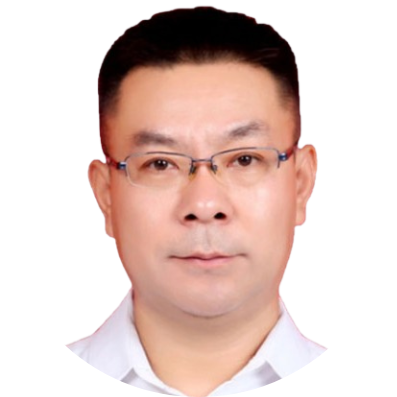 |
Yabin Li
China Waterborne Transport Research Institute, China |
| |
Brief Introduction: Li Yabin,Born in Tieling, Liaoning Province, he holds a Doctor of Science degree and works as a Professor at the China Waterborne Transport Research Institute. He currently serves as the Dean of Qingdao Shipping Development Research Institute.
He has presided over and participated in numerous research projects including the National Key R&D Program and the National Science & Technology Support Program. He is a member of the Maritime Expert Committee of the Ministry of Transport and included in the Marine Utilization Demonstration Expert Database of the Ministry of Natural Resources.
He has received honorary titles such as the May 4th Youth Medal and the Lei Feng Award from the Ministry of Transport. He has been awarded over ten provincial and ministerial-level top honors, including the Highest Award for Scientific and Technological Progress issued by the China Institute of Navigation, and has published more than 30 academic papers. |
| |
| Speech Title: R&D of Coastal MASS Intelligent Navigation System and Full-Scale Operation Practice of MV Zhifei |
| |
Abstract: Consistent with the equivalent safety requirements of the IMO MASS Code, this keynote presents a ship-shore collaborative intelligent navigation system designed for China's crowded, complex coastal waters. We have made breakthroughs in high-precision marine target detection, dynamic multi-vessel collision avoidance, autonomous berthing/unberthing and integrated ship-port-shore remote control. This domestically built complete system is installed aboard MV Zhifei, one of China's pioneering autonomous demonstration ships.
Over four years of commercial trials along Shandong's coast, MV Zhifei has completed more than 1,500 voyages spanning over 100,000 km, proving reliable autonomous navigation performance. Drawing on long-term operational data, we outline upgrades for technology, navigation services and maritime regulation, alongside an integrated test platform combining real ships, physical models and virtual simulation.
The system cuts navigation hazards and lessens crew workloads, enabling coastal demonstration deployment. Future work will improve standards and extend the technology to inland waterways and nearshore offshore shipping. |
| |
| |
| Keynote Speaker Ⅳ |
| |
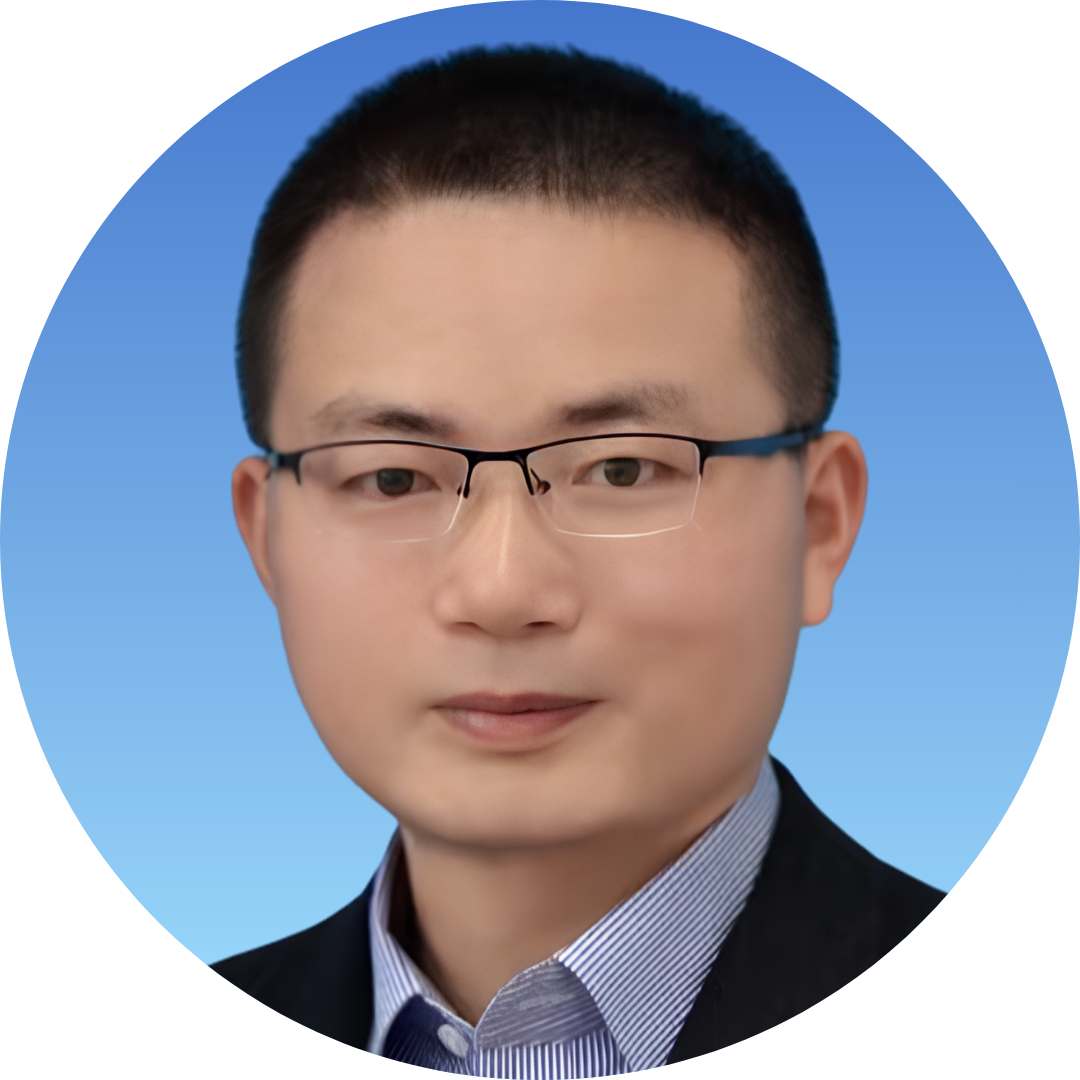 |
Quanbo Ge
Nanjing University of Information Science and Technology, China |
| |
| Brief Introduction: Quanbo Ge is a Professor and doctoral supervisor at the School of Automation, Nanjing University of Information Science and Technology. His research interests include autonomous unmanned systems, low-altitude embodied intelligence, low-altitude aerial transportation systems, intelligent control, state estimation, and cooperative perception and control of UAVs. He has led or participated in multiple national and provincial research projects, including projects supported by the National Natural Science Foundation of China, major special research programs, and aviation science foundations. He has published more than 50 journal and conference papers in leading venues such as IEEE Transactions on Automatic Control, IEEE Transactions on Signal Processing, IEEE Transactions on Intelligent Transportation Systems, Science China, Acta Automatica Sinica, and related journals. He has also been granted multiple invention patents. His team has established experimental platforms for UAV flight tests, providing practical conditions for the validation of autonomous flight, low-altitude perception, intelligent control, and landing technologies. His recent research focuses on robust control, vision-based perception, autonomous decision-making, and control-perception integration for autonomous unmanned systems in complex low-altitude environments. |
| |
| Speech Title: Autonomous Landing of Unmanned Aerial Vehicles on Maritime Moving Platforms: Robust Control and Vision-Based Perception in Complex Marine Environments |
| |
| Abstract: Autonomous landing on maritime moving platforms is a challenging task for unmanned aerial vehicles (UAVs) due to platform motion, wind disturbances, environmental uncertainty, limited onboard sensing, and strict safety requirements during the final approach and touchdown phases. This presentation focuses on key control and perception technologies for UAV autonomous landing on waterborne or maritime moving platforms. From the control perspective, robust and adaptive guidance methods are introduced to enhance path following, disturbance rejection, constraint handling, and landing safety under complex wind fields and moving-platform conditions. Related methods include fully actuated system-based control, adaptive sliding mode control, wind-aware guidance vector fields, control barrier function-based safety constraints, and disturbance-compensated model predictive control. These approaches aim to improve tracking accuracy, robustness, feasibility, and real-time performance when UAVs operate close to the ground or water surface. From the perception perspective, airborne visual target detection and recognition are discussed for dynamic surface environments, where background variation, moving targets, water-surface interference, and visual disturbances may reduce detection reliability. By incorporating background prediction and semantic compensation, the perception system can provide more reliable target information for autonomous decision-making and landing guidance. The presentation further discusses how robust control and vision-based perception can be integrated to support UAVs in identifying landing targets, compensating for external disturbances, tracking desired approach paths, and achieving safer autonomous landing on maritime moving platforms. This work highlights the importance of control-perception coordination for intelligent UAV operations in complex marine environments. |
| |
| |
| Keynote Speaker Ⅴ |
| |
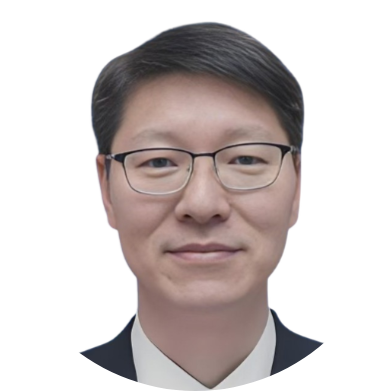 |
Huafeng Wu
Shanghai Maritime University, China |
| |
| Brief Introduction: Dr. Huafeng Wu is a Professor, Doctoral Supervisor, and Vice Dean of the Graduate School at Shanghai Maritime University. He is an IEEE Senior Member, a Shanghai Shuguang Scholar, Vice President of the Shanghai Institute of Electronics, and head of the Shanghai "Intelligent Maritime Technologies and Systems" innovation team. Recognized among the World's Top 2% Scientists, his research focuses on sensing, communication, navigation, and big data technologies for intelligent navigation and smart oceans. He has published over 100 papers, with 12 designated as ESI Highly Cited or Hot Papers. He has led over 30 projects, including five at the national level comprising one NSFC Key Project, three NSFC General Programs, and one National Key R&D sub-project. Holding 17 national and six international patents, his accolades include the China Institute of Navigation's Youth Science and Technology Award, Outstanding Innovation Team Award, and First Prize for Scientific and Technological Progress, alongside the Shanghai Municipal Second Prize for Scientific and Technological Progress. |
| |
| Speech Title: Research on Channel Estimation for Reconfigurable Intelligent Surface (RIS)-Aided Maritime Communications |
| |
| Abstract: Maritime wireless communications often face sparse coastal infrastructure, limited coverage, and fast channel variations caused by node mobility and sea-surface propagation. Especially in high-latitude waters, sea-ice blockage and frequency-dependent ionospheric or electromagnetic disturbances may pose additional challenges. RISs can create controllable reflected paths, extend coverage, and potentially support multihop maritime networking, but their gains depend on timely and accurate channel state information. This research investigates dynamic cascaded channel estimation for RIS-assisted maritime communications. Sea spectra, significant wave height, and platform motion model common stochastic AoA/AoD variations, while cascaded Nakagami-m fading characterizes RIS-related links. Distance, phase rotation, angular variation, and channel decorrelation are incorporated into the state-transition model and process-noise covariance. An augmented real-valued Kalman framework combines geometry- and sea-state-dependent covariance adaptation, innovation-residual feedback, adaptive weighting for potentially noncircular disturbances, and constrained Kalman gains. The posterior Cramér–Rao lower bound characterizes the estimation limit. Estimation errors are propagated to RIS phase control and effective SNR to analyze symbol error rate, achievable rate, and outage probability. Numerical results show improved estimation accuracy under mobility and statistical mismatch. Accurate channel estimates reduce RIS phase mismatch and enhance coherent combining and communication reliability. These findings support maritime RIS channel sensing and reliable transmission, while indicating promising applications in sparsely connected polar waters. |